


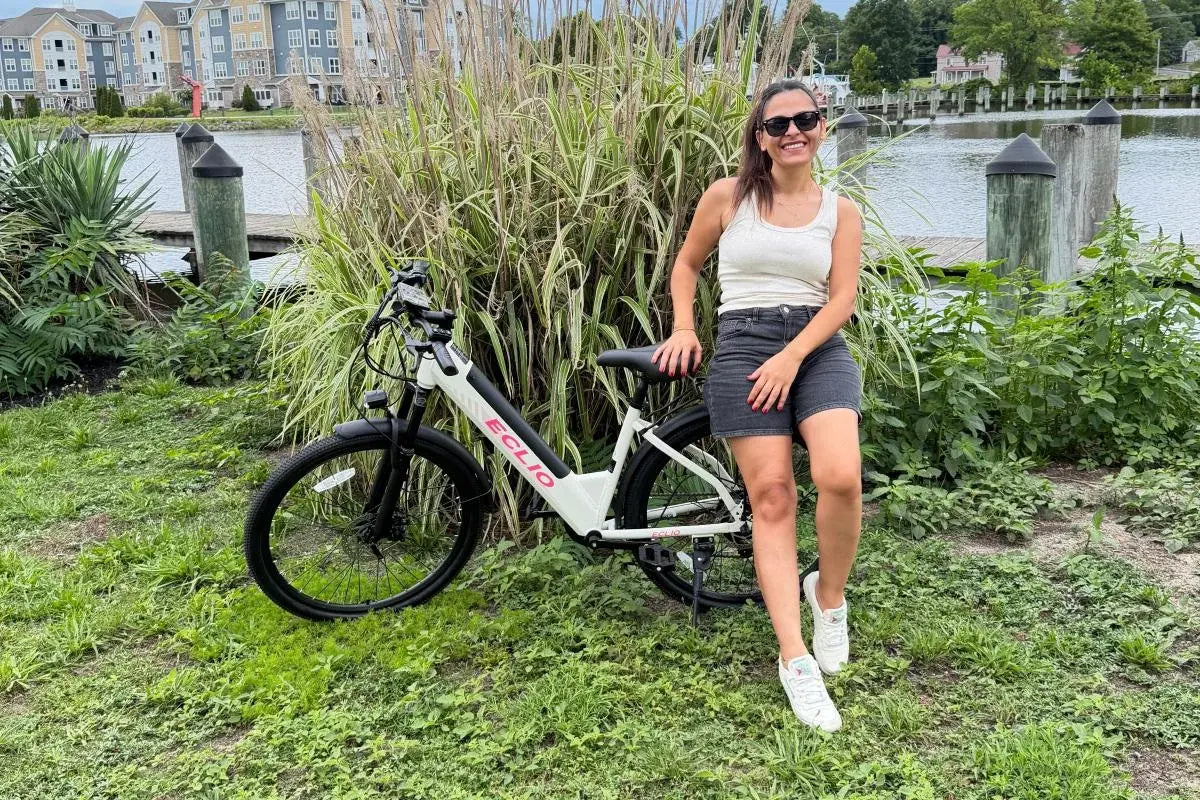
If you have spent any time around electric bikes, you have heard the same question over and over: how fast do electric bikes go, really? The honest answer is, it depends on three things: the class of bike you buy, the motor on it, and the local laws where you ride. In 2026, the US market has settled into a clear three-tier system that makes the answer much easier than it was five years ago.
The Basics: How Fast Can Ebikes Go?
In the United States, most street-legal electric bikes provide powered assistance up to 20 mph or 28 mph. However, understanding how fast can an electric bike go requires distinguishing between motor assistance and natural physical limits.
|
Road Type |
Motor Assistance Limit |
Human / Gravity Max |
|
Standard Streets |
20 mph to 28 mph |
30+ mph (Downhill) |
|
Off-Road Trails |
Uncapped (35+ mph) |
Terrain Dependent |
An electric bike's motor is engineered to assist your movement up to a pre-set threshold. Once you reach that specific speed limit, the motor seamlessly cuts off. You can still ride faster if you pedal hard or ride downhill. Gravity and human leg power take over where the motor stops.
When people ask how fast are electric bikes, they are usually asking about the max assisted speed set by manufacturer firmware and regional law.
Understanding Electric Bike Classifications in America

To maintain safety on public roads and multi-use paths, forty-one U.S. states have adopted standardized electric bike classifications. These categories govern how the motor delivers power and define the legal ebike speed limit. Current federal rules for Bureau of Land Management property define the ebike classes this way, although state and local rules can differ.
|
Ebike Class |
Assist Type |
Throttle Included |
Motor Assist Cutoff |
|
Class 1 |
Pedal Assist Only |
No |
20 mph |
|
Class 2 |
Pedal Assist + Throttle |
Yes |
20 mph |
|
Class 3 |
Pedal Assist Only |
No (varies by state) |
28 mph |
Class 1 Ebike and Riding Feels
A class 1 electric bike provides motor assistance only when the rider is actively pedaling. The motor assistance cuts off automatically once the bicycle reaches 20 mph. Because they mimic traditional bicycles most closely, Class 1 models enjoy broad access to bike paths and paved trails.
They hold around 18 to 20 mph on flat ground with light pedaling. It is the sweet spot for bike paths, mixed-use trails, and riders who want a workout on the way home. If you stop pedaling, the motor cuts out completely.
Class 2 Ebike and Riding Feels
A class 2 ebike features a throttle mechanism—such as a twist-grip or thumb paddle—allowing the rider to propel the bike without pedaling. Like Class 1, the motor cut-off speed for Class 2 electric bikes is capped at 20 mph. These bikes are ideal for riders who want an effortless boost during stop-and-go city riding. They are also the favorite of commuters who arrive at work sweat-free, and of riders with knee or hip limits.
Class 3 Ebike and Riding Feels
Class 3 electric bikes are designed for speed and fast commuting. They provide pedal assistance up to 28 mph and are equipped with a speedometer.
On flat ground with steady pedaling, you will sit comfortably at 24 to 28 mph. That is enough to keep up with city traffic on side streets and to cut a 40-minute car commute down to under 20 minutes on the bike. The trade-off is that most states bar Class 3 bikes from bike paths shared with pedestrians. They are used for road lanes and dedicated bike lanes.
Key Factors That Influence Real-World Ebike Top Speed

While legal guidelines define maximum threshold limits, actual conditions dictate how rapidly your bike reaches its peak momentum. Real-world performance depends on several factors.
- Motor Wattage and Voltage: Higher wattage motors (such as 500W to 750W sustained ratings) deliver the torque required to sustain top speeds on steep inclines.
- Total Payload Weight: Heavy cargo or riders increase rolling resistance, slightly slowing acceleration and hill-climbing momentum.
- Tire Pressure and Tread: Smooth, high-pressure commuter tires minimize pavement resistance compared to aggressive off-road knobby tires.
-
Battery Charge Level: As lithium-ion battery voltage drops near the end of a charge cycle, motor output slightly tapers down.
Well-engineered models optimize these variables effortlessly. Brands like Eclio electric bikes combine high-torque 48V brushless hub motors with responsive battery management systems. This ensures riders reach their maximum allowed speed quickly and hold cruising speed smoothly without sluggish power dips.
Legal Regulations, Speed Limits, and Road Safety
The ebike speed limit is not just a number on a spec sheet. It is a legal line, and crossing it has real consequences. The federal law regulates the manufacturing side (capping motor output at 750W for standard ebikes), while local jurisdictions govern where you can ride.
Speed limits posted on city streets apply equally to electric bikes. Riding a Class 3 bike capable of 28 mph through a crowded pedestrian zone limited to 15 mph is both unsafe and illegal. Always observe local trail signage, as many state parks limit access exclusively to Class 1 models to protect trail integrity and pedestrian safety.
For most American riders, the safe path is simple: buy the ebike class that matches where you ride, wear a helmet, and add lights and reflectors if you ride at dawn or dusk. Class 3 riders in particular should treat their bike like a moped in traffic, because at 28 mph, that is exactly how car drivers experience you. And riding a de-restricted ebike above 28 mph on a public road can reclassify the bike as a motor vehicle in many states, which requires registration, insurance, and a driver's license.
Summary: Find the Ideal Ebike Speed for Your Daily Riding

Knowing how fast electric bikes go allows you to select the ideal one for your lifestyle. If your routine involves relaxed trail rides and suburban parks, a Class 1 or Class 2 model capped at 20 mph offers ample speed with most path access. For long-distance urban commutes alongside traffic, a 28 mph Class 3 model saves much time. The best choice is the bike whose speed, fit, range, braking performance, and legal classification match the route.
Frequently Asked Questions (FAQs)
1. Can you make an electric bike go faster than its factory limit?
While some e-bikes allow software speed limiters to be modified, removing these caps often voids your warranty, degrades battery longevity, and transforms the bike into an unregistered motor vehicle under state law. Some high-powered models exceed 28 mph and fall outside common electric bike classifications. They may be intended only for private property or designated off-road areas.
2. Do you need a driver's license to ride an e-bike in the US?
For standard Class 1, Class 2, and Class 3 electric bikes capped at 28 mph or lower, most states do not require a driver's license, registration, or insurance.
3. How fast do electric bikes go without pedaling?
On throttle-equipped Class 2 e-bikes, the motor can drive the bike up to 20 mph without any pedaling from the rider.


Leave a comment
All comments are moderated before being published.
This site is protected by hCaptcha and the hCaptcha Privacy Policy and Terms of Service apply.