


Suburban highways and city streets across North America are undergoing a quiet transformation. As fuel costs fluctuate and traffic congestion grows, personal micro-mobility has shifted from a novel alternative into mainstream transportation.
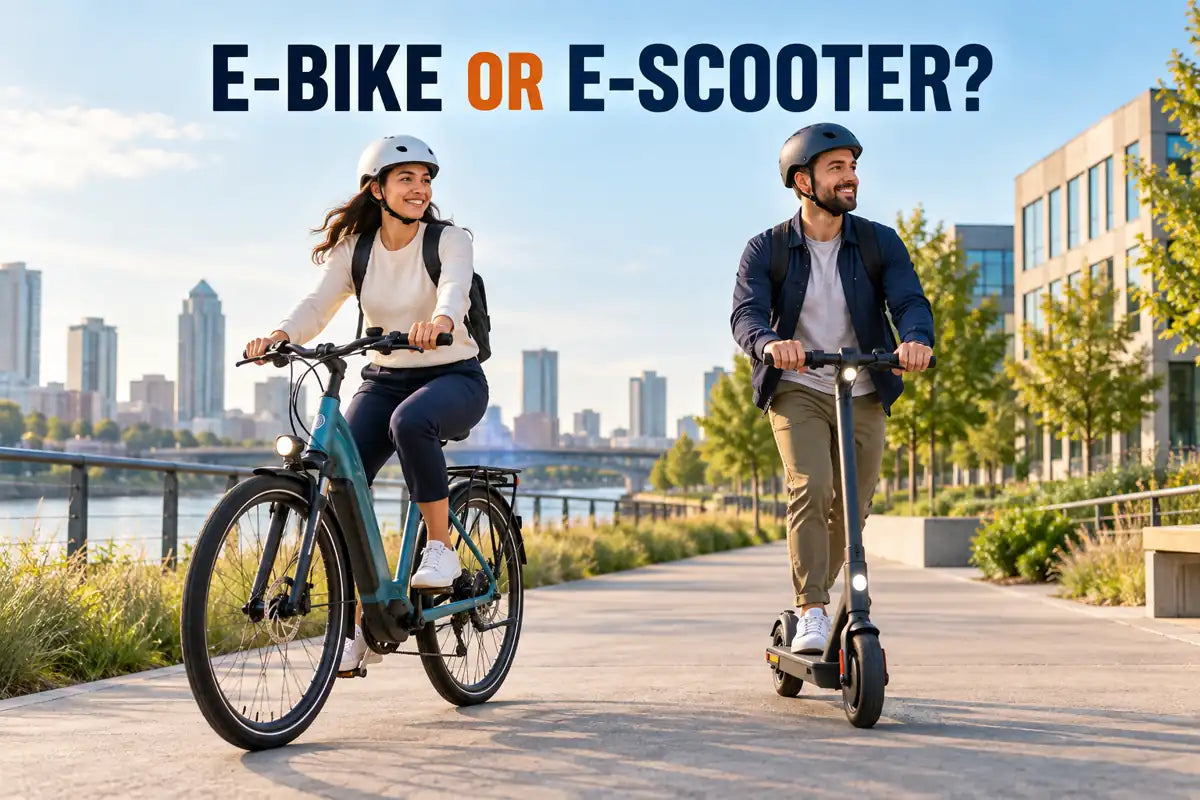
Electric bikes and electric scooters both make short car-free trips easier, but they offer very different riding experiences. One provides a seat, pedals, larger wheels, and flexible carrying capacity. The other emphasizes compact storage and simple, throttle-controlled riding.
When comparing an electric bike vs electric scooter, the better option depends on distance, road quality, storage space, physical comfort, and what needs to be carried. Speed alone does not settle the question. This guide explains the practical differences and helps determine whether an electric bike or scooter is the better purchase for your everyday travel.
Electric Bike VS Scooter: Quick Comparison
An electric bike operates like a conventional bicycle with a motor, battery, and controller. Riders sit on a saddle and can pedal normally or use pedal assistance. An electric scooter generally has a standing deck, small wheels, upright handlebars, and no pedals. Most models move entirely through throttle input.
That distinction shapes the entire riding experience. Ebikes supports both human and electric power, while an e-scooter depends almost completely on its battery and motor. If an e-bike battery runs out, the rider can usually continue pedaling, although the added weight makes it harder. A depleted scooter has to be pushed or carried.
|
Category |
Electric Bike |
Electric Scooter |
|
Average Range |
30 – 60+ miles |
15 – 30 miles |
|
Top Speed |
20 – 28 mph (Class 1–3) |
15 – 25 mph |
|
Riding Posture |
Seated |
Standing |
|
Typical Wheel Size |
20 – 28 inches |
8.5 – 10 inches |
|
Cargo Carrying |
Racks, baskets, panniers, or trailers |
Backpack only |
|
Battery Backup |
Can still be pedaled |
Must be pushed or carried |
|
Pedaling |
Available |
Not available |
|
Portability |
Larger and heavier |
Often foldable and easier to store |
|
Best Use |
Daily commutes, errands, recreation |
Short urban and first-mile/last-mile trips |
Riding Comfort, Range, and Road Performance

For longer journeys, an e-bike normally provides a more comfortable platform. A saddle supports the rider’s weight, while larger wheels roll more confidently over cracks, patched asphalt, and small potholes. Pedaling also lets the rider change position and remain active during the trip.
A scooter can feel agile on smooth pavement, but its small wheels respond more sharply to road impacts. The U.S. Consumer Product Safety Commission specifically warns that obstacles and uneven surfaces can cause small scooter tires to stop suddenly.
Battery capacity, rider weight, speed, hills, tire pressure, and assistance level all affect real-world range. However, e-bikes generally suit longer trips because riders can conserve battery through lower pedal-assist settings. In an electric scooter vs ebike comparison, scooters work best for short, predictable routes. E-bikes are usually more capable when the trip includes hills, longer distances, or unexpected detours.
- Key Takeaway: For rides exceeding 15 minutes, seated pedal-assist posture significantly reduces physical fatigue compared to standing on a compact deck.
Portability, Storage, and Cargo Carrying

Where electric scooters shine is absolute portability. Weighing between 25 and 45 pounds, a folding scooter easily accompanies you up office stairwells, onto subway cars, or into apartment closets. It solves the "last-mile" commute challenge with ease.
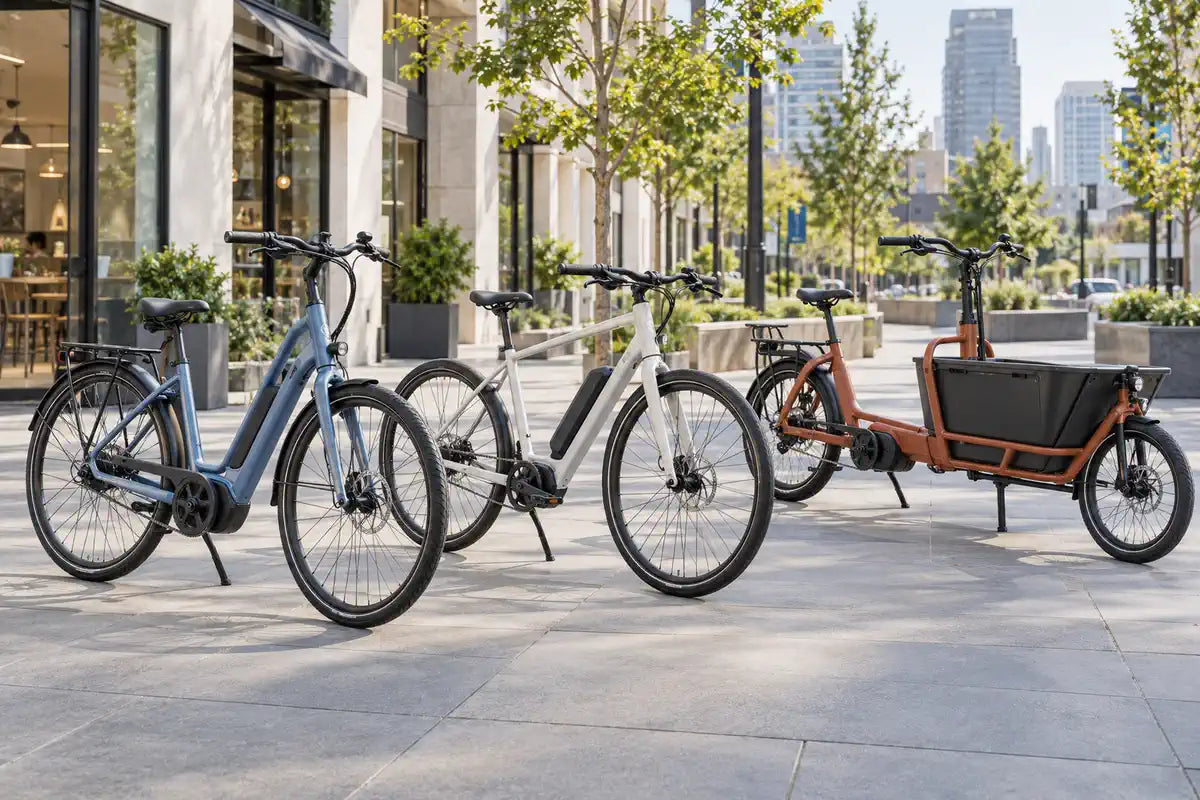
Conversely, the ebike vs scooter trade-off often comes down to storage convenience versus cargo capability. Standard electric bikes weigh between 45 and 70 pounds, making them harder to carry up multiple flights of stairs. However, an e-bike excels at hauling cargo. Integrated rear racks, front baskets, and frame mount points transform an e-bike into a genuine car replacement capable of carrying groceries, laptop bags, or child seats.
Purchase Price and Long-Term Ownership
A reliable mid-range e-bike runs $800 to $2000 and an electric scooter runs $400 to $1200. Entry-level electric scooters often cost less than full-size e-bikes. However, premium scooters can equal or exceed the price of practical commuter bicycles.
E-bikes contain traditional bicycle components such as chains, gears, pedals, tubes, and derailleurs. These parts require periodic adjustment and replacement. Scooters may have fewer drivetrain components, yet their tires, brakes, folding joints, and steering stems still need inspection. Battery replacement cost, parts availability, warranty coverage, and customer support matter for both. A low initial price offers little value if replacement parts are unavailable.
Safety and Legal Regulations

Both electric scooters and bicycles require responsible riding. Wear a properly fitted helmet, check the brakes and tires, and use lights after dark. E-bikes generally feel more stable because of their larger wheels and seated riding position. Scooters are highly maneuverable, but their smaller tires and short wheelbase demand greater attention around potholes, curbs, gravel, and wet surfaces.
Battery safety is equally important. The CPSC recommends buying products certified to applicable safety standards, using only the manufacturer-approved charger, remaining present while charging, and never charging while asleep.
U.S. rules vary by state and city. Federal product regulations define certain low-speed electric bicycles as pedal-equipped vehicles with motors under 750 watts and motor-only speeds below 20 mph, but roadway access, helmet requirements, age restrictions, and permitted riding locations are governed locally. Scooter rules can differ even between neighboring cities. We consider it necessary to check state DMV guidance and municipal regulations before purchasing.
Final Words: Which One Should You Buy?
The electric bike vs electric scooter question has no universal winner. Scooters are compact, simple, and well suited to short connections through dense cities. E-bikes are more comfortable, adaptable, and capable of replacing a larger share of car trips.
Choose an electric scooter when:
- Most trips are short and take place on smooth urban pavement.
- The vehicle must be folded, carried, or stored in a small apartment.
- Public transportation covers part of the journey.
- Cargo capacity and pedaling are unnecessary.
Choose an electric bike when:
- Commutes regularly extend beyond a few miles.
- Comfort matters more than compact storage.
- Routes contain hills, rough pavement, or mixed surfaces.
- Groceries, work equipment, or other cargo must be carried.
- The rider wants exercise as well as motor assistance.
- Weekend recreation is part of the purchase plan.
Deciding whether to buy an electric bike or scooter ultimately aligns with your lifestyle, distance needs, and preference for comfort. Evaluate your route, test your local road conditions, and choose the ride that turns your daily commute into an enjoyable journey.
FAQs about Electric Bikes and Scooters
1. Is an electric bike safer than an electric scooter?
Neither vehicle is automatically safe, but an e-bike’s larger wheels, seated position, and bicycle-style handling generally provide greater stability on uneven roads. Rider behavior, speed, visibility, braking quality, and road conditions remain critical.
2. Can I ride electric bikes or electric scooters in rain?
Most reputably manufactured e-bikes and e-scooters carry water-resistance ratings (such as IPX4 or IPX5), meaning they can handle light rain and damp pavement. However, e-bikes are inherently safer in wet conditions due to larger tire contact patches that offer superior traction compared to small scooter wheels.

Leave a comment
All comments are moderated before being published.
This site is protected by hCaptcha and the hCaptcha Privacy Policy and Terms of Service apply.